As an Amazon Associate we earn from qualifying purchases.
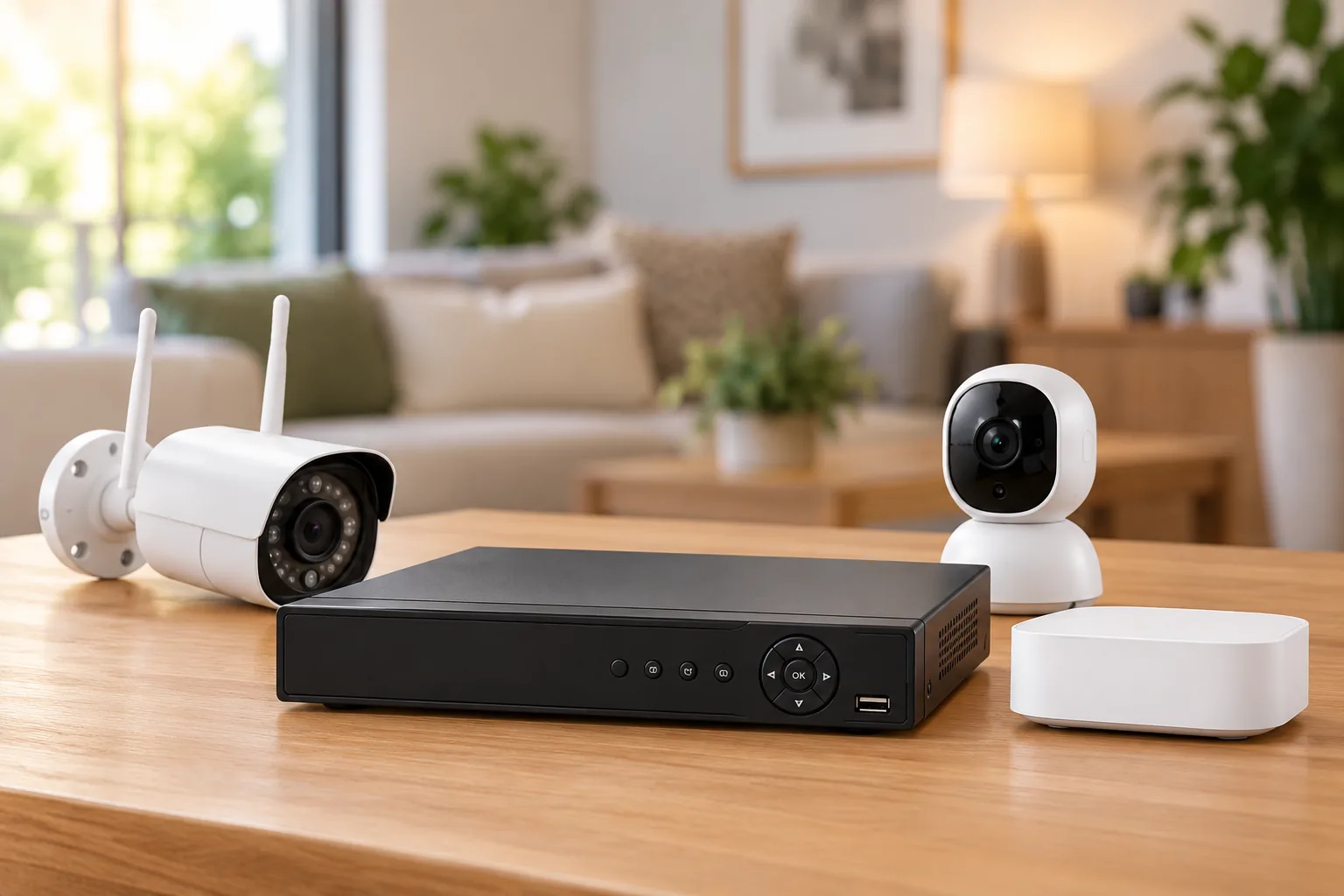
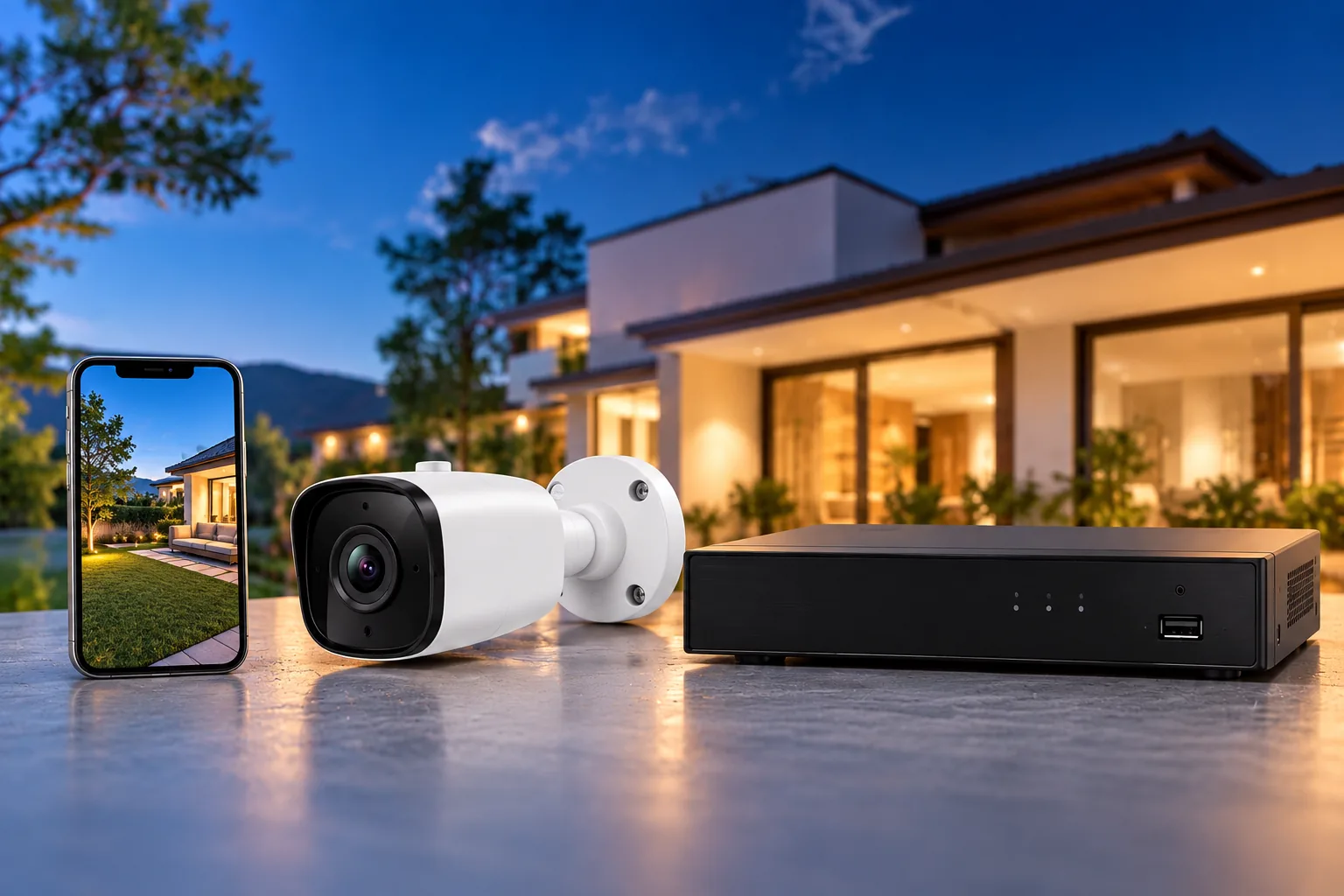
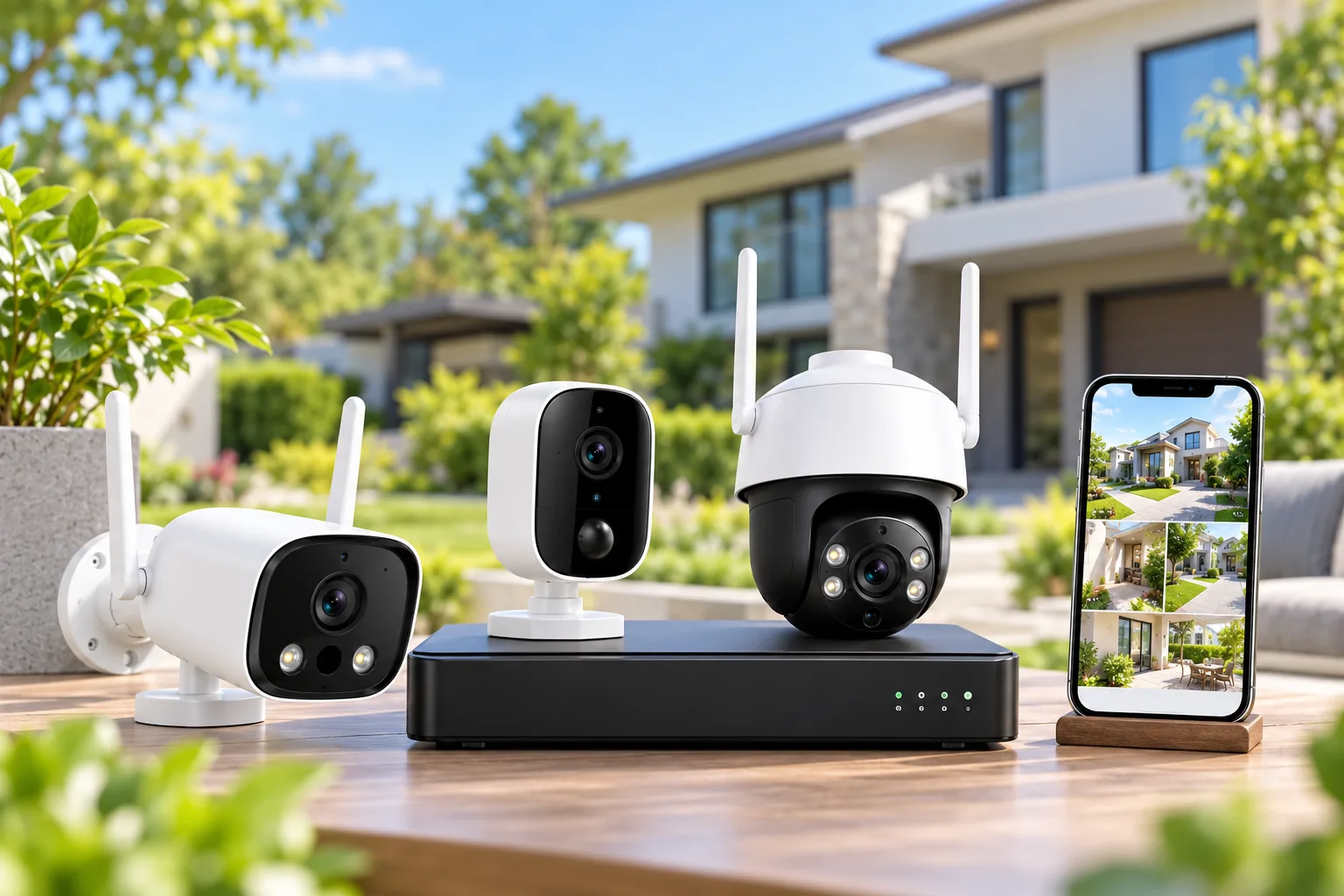
ANNKE wireless security cameras require a model-by-model choice: the WS300 is a powered camera-and-recorder system, the WB400 is a battery camera with solar charging support, and the WPT500 is a powered pan-and-tilt camera. Start with the available power and your recording requirements, then verify the exact recorder and app relationship. The ANNKE name alone does not establish compatibility.
This guide is for US home buyers comparing those documented families or adding cameras to a WS300. It compares manufacturer specifications and support guidance; it does not report hands-on performance tests.
As an Amazon Associate, we earn from qualifying purchases. We may earn a commission when you buy through links on this page.
Quick decision: Consider WS300 when you want a recorder-centered installation and can supply power at every camera. Consider WB400 when battery operation is necessary. Consider WPT500 when you want powered pan-and-tilt operation with local card storage, subject to checking its app and integration requirements separately.
Contents
- Compare the ANNKE wireless camera families
- WS300: choose it around the recorder and power locations
- Expanding WS300: verify the exact add-on
- WB400: battery placement with a charging plan
- WPT500: powered pan-and-tilt with separate integration checks
- Before purchase and permanent mounting
- Questions buyers ask
- Choose the family before the bundle
Compare the ANNKE wireless camera families
A wireless video connection and a battery power supply are separate features. ANNKE explicitly notes that WS300 cameras need power adapters. WB400, by comparison, has a rechargeable battery. Choosing between these families changes the installation before resolution or detection features enter the discussion. ANNKE WS300 specifications, ANNKE WB400 specifications.
| Model or family | Documented power | Resolution | Documented local storage | Important boundary |
|---|---|---|---|---|
| WS300 four-camera system | DC 12 V cameras and NVR | Included cameras: 3MP, 2304 × 1296 | NVR: one SATA interface, up to 6 TB | Check the selected HDD bundle; wireless is not battery powered |
| WS300 add-on two-pack | DC 12 V | 3MP, 2304 × 1296 | Depends on the compatible WS300 system | Cannot operate standalone |
| WB400 | 9000mAh rechargeable battery; DC 5 V charging; solar support | 4MP, 2560 × 1440 | microSD up to 256GB | Battery and solar do not establish continuous recording capability |
| WPT500 | DC 12 V | 5MP, 2880 × 1620 | microSD up to 128GB | App and WS300 integration need separate confirmation |
The model-specific entries come from ANNKE's WS300 system, WS300 add-on, WB400, and WPT500 pages. Storage ceilings describe supported capacity, not included media or a guaranteed number of recording days.
Use this table to eliminate a mismatch first. A WB400 does not become a WS300 expansion camera because both use Wi-Fi. A WPT500 does not become battery powered because the listing calls it wireless. And a two-camera add-on package does not become a complete system because its price appears attractive.
WS300: choose it around the recorder and power locations
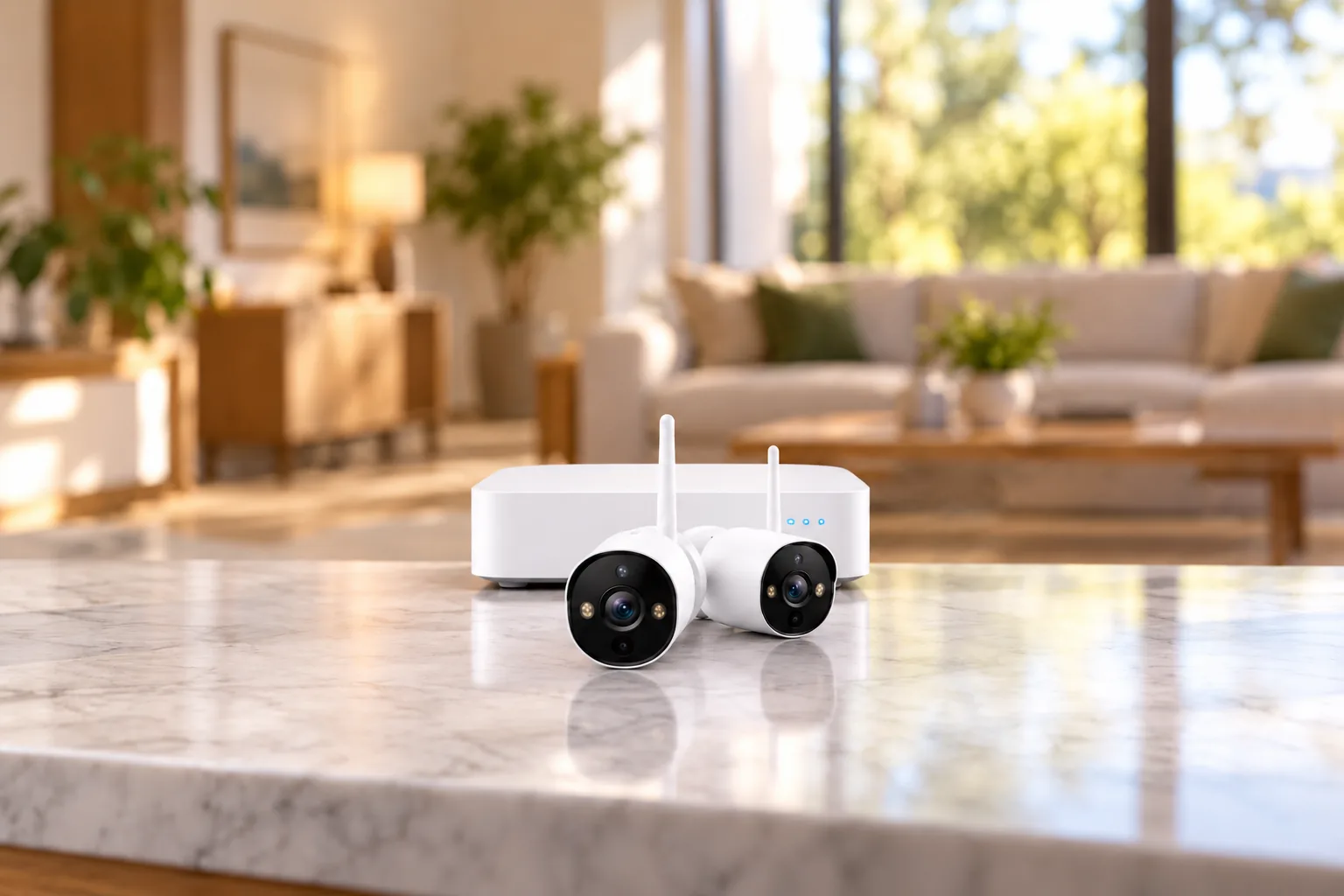
The documented WS300 package combines an eight-channel wireless network video recorder, or NVR, with four 3MP cameras. The NVR lists 2.4GHz Wi-Fi and a 10/100 Ethernet network interface; both cameras and recorder use DC 12 V power. ANNKE identifies ANNKE Sight as the remote-viewing app for this system. WS300 product documentation.
That architecture suits a buyer who wants to plan several camera positions around a central recorder. Before buying, mark a power route for each camera and a protected location for the NVR. A location with a suitable view but no appropriate power arrangement is an unresolved installation problem, even if a wireless signal reaches it.
Wireless camera installation starts with confirming power and signal at the actual mounting positions.
Keep three resolution specifications separate
WS300 illustrates why a single resolution headline can mislead. Its included cameras are 3MP at 2304 × 1296, the NVR lists recording support up to 5MP, and HDMI/VGA display output is up to 1080p. Those describe three different parts of the system. The recorder's maximum does not turn an included 3MP camera into a 5MP camera. WS300 specification table.
Likewise, monitor output is not the same specification as recorded video. Write down camera capture resolution, supported recording resolution, and display output in separate rows when comparing a bundle. This is especially useful if a listing emphasizes the recorder ceiling while the camera model appears only in a smaller specification block.
The same separation applies to channels. Eight input channels do not promise eight simultaneous full-resolution playback windows. ANNKE lists four-channel maximum playback and a playback capacity of four 3MP channels or two 5MP channels. A buyer who needs to review several views together should check that playback specification alongside the channel count. WS300 recorder specifications.
Check storage as a selected component
WS300 lists one SATA interface and capacity up to 6 TB. Confirm whether the exact package includes an HDD and which capacity is selected. A supported maximum is not a promise that the largest drive is supplied, nor does a drive capacity alone establish retention. WS300 storage specifications.
For an illustrative four-camera home, list the desired views as front approach, driveway, side passage, and rear entrance. Then decide what each view must preserve and how far back you need to search. This is a planning example, not a claim about measured coverage or storage duration. Request confirmation of recording modes and retention settings for the exact configuration before relying on a particular history window.
Security camera recording options help separate storage capacity from the kind of history you actually need.
Expanding WS300: verify the exact add-on
ANNKE's WS300 add-on page identifies the two-pack as SKU AU-KI71GK0203-V1. Its notice limits compatibility to the listed WS300 four-, six-, and eight-camera systems and says the cameras cannot be used standalone. The cameras list 3MP resolution, DC 12 V power, IEEE 802.11b/g/n wireless, and an RJ45 connection. Official WS300 add-on notice.
Use that notice as an identity check, not an invitation to buy any ANNKE camera with similar specifications. Photograph the recorder label, record how many channels are occupied, and compare the proposed camera's exact model with the supported add-on. Confirm the shipping-market package, adapter arrangement, and pairing procedure with the seller or manufacturer before ordering. The SKU displayed on a global page does not establish a particular US bundle entitlement.
For example, assume an eight-channel recorder has six cameras assigned. Two channel positions remain by simple arithmetic. That is only the first expansion check: the new cameras still must be compatible, their power arrangements must work, and the intended locations must have a usable connection. If eight channels are already assigned, an extra two-pack does not create additional recorder capacity.
There is a useful model-specific warning in ANNKE's support forum. Technical Support states that WPT400 lacks ONVIF and cannot work with WS300. ONVIF is a network-video interoperability standard, but the presence of a brand name or Wi-Fi connection does not establish support for it. This WPT400 answer cannot be transferred to WPT500; obtain a separate answer for that model. ANNKE WPT400 compatibility response.
WB400: battery placement with a charging plan
WB400 is the relevant documented option here when a camera needs rechargeable battery power. ANNKE lists a 9000mAh battery, solar support, 4MP video at 2560 × 1440, and 270-degree horizontal pan with 90-degree vertical tilt. Its specification table lists dual-band 2.4G/5.8G IEEE 802.11ax networking and Bluetooth-assisted pairing. WB400 product page.
The specification table's 5.8GHz wording is more specific than the page's general 5GHz description. Check the exact US unit and your router settings rather than assuming every regional wireless configuration is interchangeable. Pairing assistance also should not be confused with the camera's normal video connection.
ANNKE describes solar energy as supplementary charging when sufficient sunlight is available. Plan access for manual charging rather than treating the panel as a guarantee of indefinite operation. A shaded camera location and a useful panel location may be different, so assess both before drilling. The published battery capacity alone cannot predict your maintenance interval. WB400 charging guidance.
Battery-powered security cameras deserve a maintenance plan that includes access for charging and a check of the required recording behavior.
WB400 lists microSD storage up to 256GB and an IP65 weather-resistance rating. Those facts do not establish 24/7 recording, compatibility with an arbitrary NVR, or an unlimited recording history. If uninterrupted footage is a requirement, obtain an explicit model-specific answer about recording mode before choosing the camera. WB400 specifications.
App selection is clearer: ANNKE Technical Support states that WB400 uses ANNKE Sight and cannot use ANNKE Vision. Someone who already uses Vision should account for this before adding WB400, rather than assuming all ANNKE cameras appear in the same app. ANNKE WB400 app response.
WPT500: powered pan-and-tilt with separate integration checks
WPT500 lists 5MP video at 2880 × 1620, DC 12 V power, microSD storage up to 128GB, and 350-degree pan with 90-degree tilt. ANNKE also lists IP66 and indoor/outdoor use. It is a distinct powered option for a location where you want to adjust the view and can provide the specified power. WPT500 documentation.
Pan travel is not the same as seeing every direction simultaneously. Decide which direction matters when you are not actively steering the camera. A fixed view of an entrance may be more important than the ability to look elsewhere occasionally; compare the intended resting view with the task you need recorded.
This guide does not establish which app WPT500 requires or whether it can join WS300. Ask those questions using the complete model designation. Do not use the WPT400 incompatibility response to claim that WPT500 either works or fails, and do not use shared ANNKE branding as positive evidence.
Before purchase and permanent mounting
Complete this short worksheet for the exact unit or bundle:
- Identity: Photograph or obtain the full camera and recorder model labels, including revision information where shown.
- Power: Identify the required voltage, adapter, outlet or charging arrangement at every location.
- Recording: Confirm the mode you need, supplied media, supported capacity, and how footage is retrieved.
- Compatibility: Obtain an exact app and recorder answer for each proposed camera.
- Placement: Check the view, signal, cable protection, and safe mounting access before making holes.
- Acceptance: Create a sample recording, find it again, and export it using the intended account before treating setup as complete.
Wireless camera recorders should be compared by supported cameras, playback needs, and storage rather than channel count alone.
If you want to compare seller descriptions after those checks, search Amazon for ANNKE WS300 camera systems or search Amazon for ANNKE WB400 cameras. Search results do not verify the exact hardware, bundle, stock, or compatibility.
Questions buyers ask
Are ANNKE wireless cameras completely wire-free?
Some are battery powered; others require a power adapter. WS300 cameras and WPT500 list DC 12 V power, while WB400 has a rechargeable battery with solar support. Choose by the exact model's power specification, not the word wireless in a category title.
Can I use ANNKE Vision for WB400?
ANNKE's model-specific support answer says WB400 uses ANNKE Sight and cannot use ANNKE Vision. Verify the app before purchase if keeping an existing app workflow matters. That answer establishes WB400's requirement and should not be treated as a universal rule for every ANNKE model.
Does a larger card guarantee longer useful history?
Capacity is only one part of the decision. The recording mode and settings also need confirmation, and a listed capacity does not indicate supplied media. WS300, WB400, and WPT500 use different documented storage arrangements, so compare the complete recording workflow rather than capacity alone.
Choose the family before the bundle
Choose ANNKE wireless security cameras by resolving power, recording, and compatibility in that order. WS300 is the recorder-centered choice among these documented families; WB400 addresses battery placement; WPT500 offers powered pan-and-tilt with its integration questions still requiring confirmation. Save the exact model labels and get unresolved answers before ordering, then verify recording and retrieval before permanent mounting.