As an Amazon Associate we earn from qualifying purchases.
Choose security camera night vision by the detail you need from a moving subject at your actual mounting location. Infrared is useful when grayscale footage is acceptable. Low-light color needs available visible light, and supplemental white light can help when color matters and extra illumination suits the property. An advertised night-vision distance does not establish how far away you can identify a person.
This guide is for homeowners comparing outdoor night-viewing approaches. It explains documented optical tradeoffs and two specific camera examples, then gives you a practical recording check. It does not claim a tested winner or a measured identification distance.
Quick decision: Decide whether you need presence, recognizable detail, or reliable color information. Match the lighting approach to that requirement, then check saved footage of an ordinary moving approach after dark.
As an Amazon Associate I earn from qualifying purchases. We may earn a commission when you buy through links on this page.
Contents
- Which night-vision approach should you choose?
- Color night vision: compare the lighting conditions
- Why night-vision distance is not identification distance
- Use this after-dark acceptance worksheet
Which night-vision approach should you choose?
| Your priority | Approach to consider | Main limitation | What to verify |
|---|---|---|---|
| See activity without adding visible white light | Infrared, or IR, grayscale | Material appearance does not preserve visible clothing color | Moving detail and reflections at the target area |
| Keep color using existing exterior lighting | Ambient-light color imaging | Available light and exposure settings affect results | Saved moving-subject footage under normal lighting |
| Keep color where existing light is insufficient | Color imaging with supplemental white light | Light direction and neighbor impact need attention | Useful color detail with the added light operating |
A conventional day/night camera uses an infrared-cut filter for daylight color and removes it for more sensitive visible-plus-near-infrared imaging at night. That nighttime mode produces grayscale video. It is different from a thermal camera, which detects heat radiation. In complete darkness, a visual camera needs added illumination; sensitivity alone cannot create the light needed for an image. Axis: IR in surveillance
The first question is therefore practical: what light will actually reach the person you need to record? A streetlight behind the camera does not tell you how much useful light falls on a recessed gate. Conversely, a lit porch may make color imaging worth considering even when the rest of the yard looks dark.
Use the table to narrow the approach, then consider the mounting angle and subject distance. A camera that produces an attractive wide shot may still show too little of the person for the task you have in mind.
Infrared footage: useful detail, with color limits
Infrared night vision can illuminate a scene without switching on a white spotlight. Axis explains that 850 nm IR LEDs may show a faint red glow. LEDs at 940 nm reduce that visible-glow risk, but camera sensors are less sensitive to that wavelength. The wavelength alone is not a camera-quality ranking. Axis IR wavelength guidance
There is an evidence limitation that matters more than the red glow: grayscale brightness does not reliably reveal the original color of clothing. Materials reflect infrared differently from visible light. Axis gives the example of a dark shirt appearing bright under infrared illumination. Axis: Quality with a purpose
Suppose a saved IR clip shows someone wearing a pale-looking jacket. You can describe what the recording visibly shows, but you should not assume the jacket looked pale in daylight. If identifying clothing colors is central to your requirement, consider whether visible lighting and color recording are appropriate for the location.
Adding an external IR illuminator is another possible approach for a suitable camera and installation. Axis notes that standalone illuminators allow more flexible positioning and longer-reach designs. Their beam must fit the scene: too narrow can cause central glare or overexposure, while too wide wastes useful reach and illuminates unwanted objects. This is an installation design choice, not a guarantee that any extra IR lamp improves any camera. Axis standalone IR guidance
Color night vision: compare the lighting conditions
A low-light color camera is worth considering when useful color information matters and there is enough visible light for the intended scene. Supplemental white light is a separate option when the ambient conditions are insufficient. Read demonstrations with the lighting and motion conditions in mind; a bright still image does not establish a clear recording of someone walking.
Reolink CX410 is a documented example of the color-focused approach. Its published specification includes 4MP recording, an f/1.0 lens, a 1/1.8-inch sensor, PoE connectivity, and an adjustable 3000 K warm supplemental light. Those features explain its intended approach to low-light color. They do not establish that it outperforms every IR camera or identifies people at a particular distance. Reolink CX410 specifications
The captured US Tapo C520WS V2 is a second example, combining full-color night mode with IR illumination. Its US V2 specifications list a fixed 3.2 mm f/1.6 lens, a 1/3-inch sensor, 2560 × 1440 recording, and 850 nm IR illumination rated at 98 feet, or 29.9 meters. These figures apply to the documented US V2, not automatically to V1 or another regional revision. US Tapo C520WS V2 product specifications
| Documented example | Lighting and optical approach | Recording ownership example | Buyer boundary |
|---|---|---|---|
| Reolink CX410 | f/1.0 lens, 1/1.8-inch sensor, adjustable 3000 K light | Local microSD up to 256 GB or compatible Reolink NVR | No measured night-identification distance established here |
| US Tapo C520WS V2 | f/1.6 fixed lens, 1/3-inch sensor, IR and full-color night modes | Local microSD up to 512 GB or subscription Tapo Care | Verify the actual unit is the documented US V2 |
Reolink documents the CX410 local storage options; TP-Link documents the US C520WS V2 storage and subscription distinction. Card capacity and cloud services are ownership decisions, separate from night-image performance.
Consider CX410 when its PoE installation and color-lighting approach fit your intended position. Consider the documented US C520WS V2 when you want to evaluate its IR and color modes under your lighting conditions. This is a shortlist by documented approach, not a head-to-head result. You can search Amazon for Reolink CX410 or search Amazon for Tapo C520WS US V2, then confirm the model and revision offered.
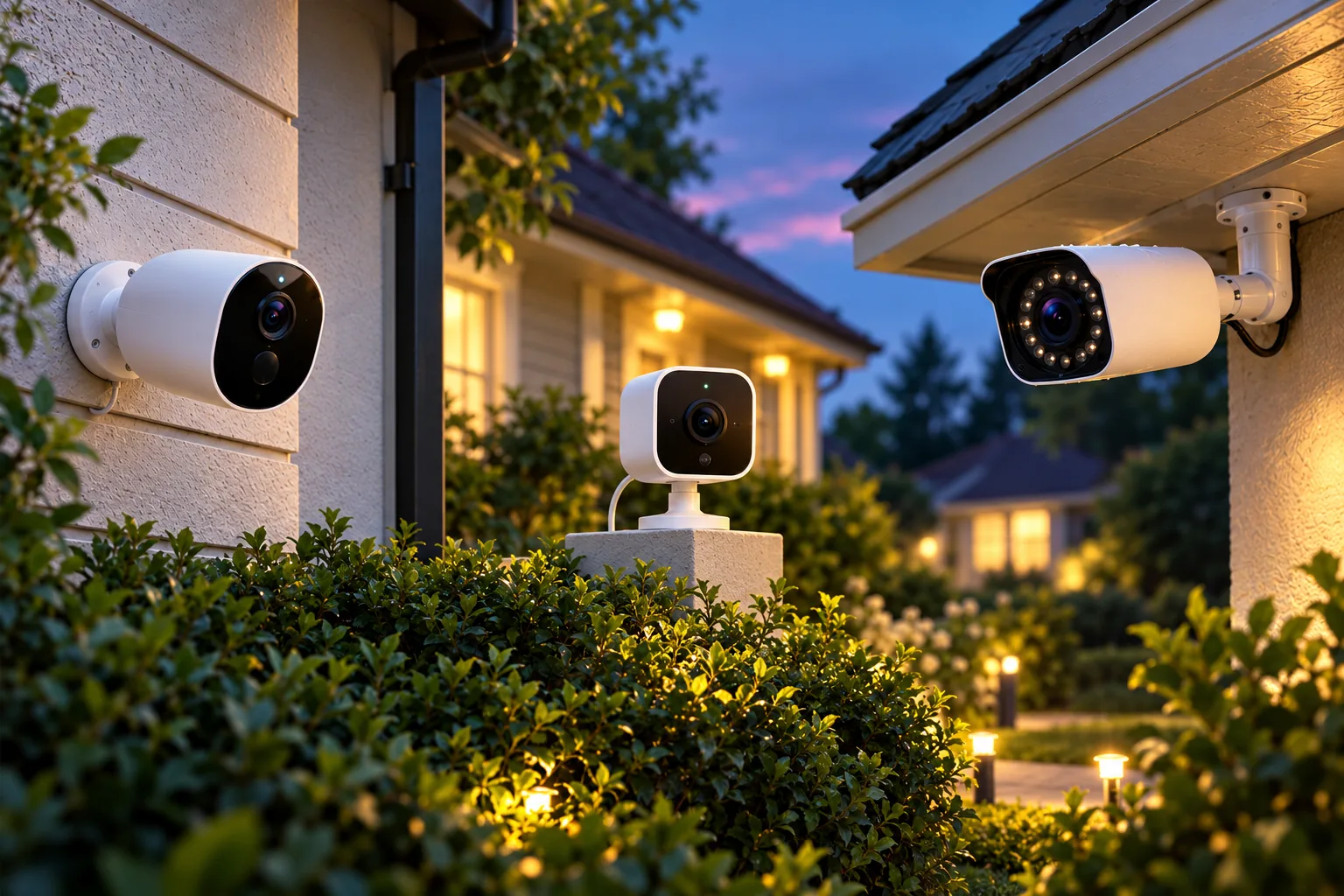
Outdoor cameras with lights should be chosen with the lighting direction and neighboring homes in mind.
Why night-vision distance is not identification distance
Illumination reach describes a lighting specification. Identification also depends on how much of the recorded image the subject occupies, the viewing angle, motion, and available light. The US Tapo C520WS V2’s published 29.9-meter IR reach therefore cannot be read as a 29.9-meter face-identification promise.
Axis’s purpose guide uses approximate pixel-density levels to distinguish monitoring, detection, recognition, and identification. For identification, it associates roughly 250 pixels per meter with an important camera-to-object inclination angle below 20 degrees, while also stressing scene conditions and specific analytic requirements. Treat that as a planning reference, not a guarantee derived from a megapixel label. Axis purpose and pixel-density guidance
For an illustrative calculation, assume a perfectly rectangular scene spans 10 meters across and all 2560 horizontal pixels cover that width evenly at the target plane. Dividing 2560 by 10 gives 256 pixels per meter. That simplified arithmetic says nothing about a moving face being shadowed, turned away, or blurred, and a real camera view is not that simplified rectangle at every distance. It shows why scene width matters; it does not certify identification.
A person recognizing a familiar visitor in playback is also different from an automated recognition system. If you need a specific analytic function, follow its own vendor requirements rather than borrowing a general image-density figure.
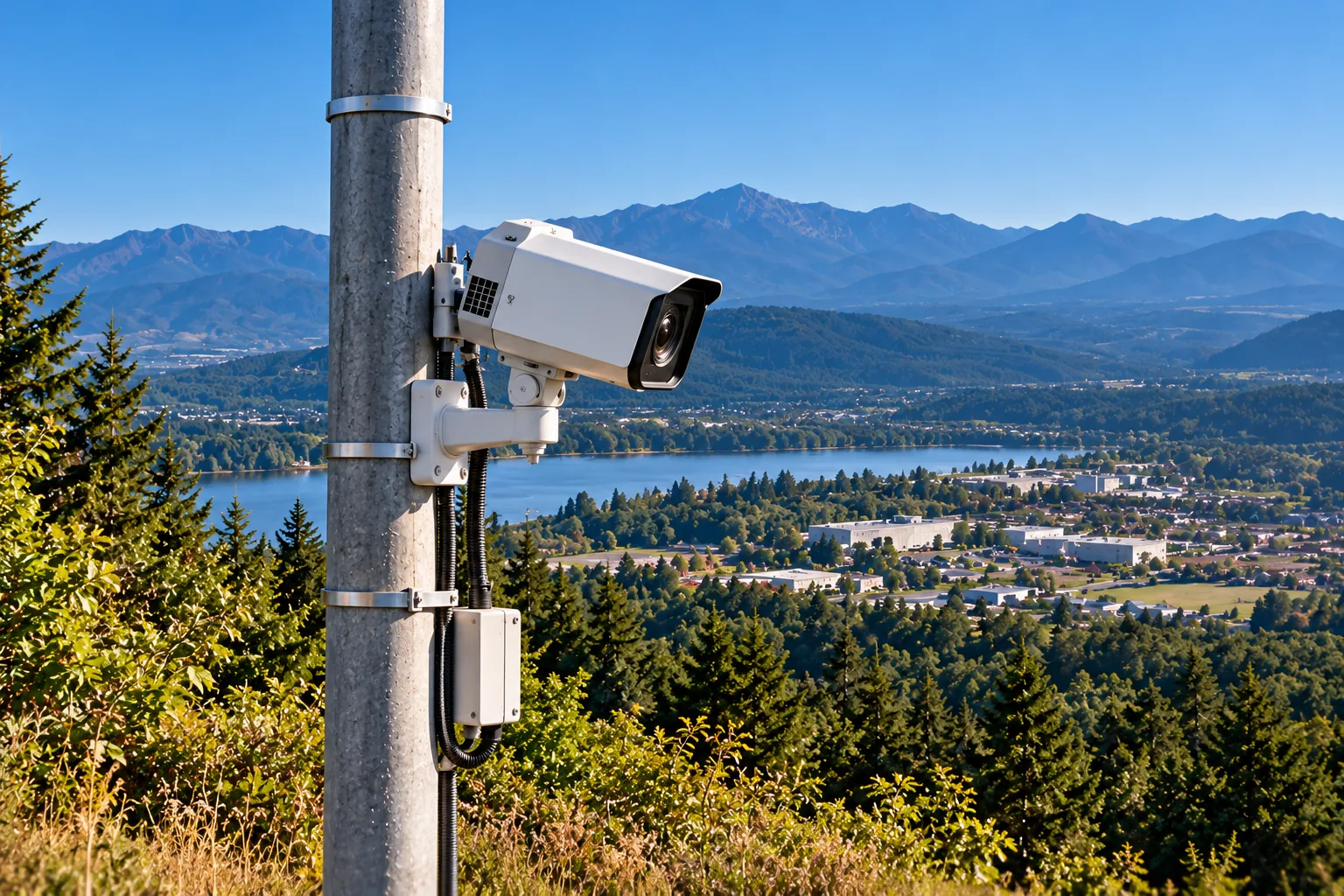
Outdoor camera placement should begin with the subject’s position and viewing angle before you rely on a distance claim.
Motion blur and noise can defeat a bright image
A shutter’s exposure time determines how long the sensor gathers light for an image. A slower shutter allows more light but can blur a moving subject. Axis specifically warns that a static low-light scene may look sharp while motion becomes unusable when the exposure is too long. Its guidance recommends checking the expected motion in all required lighting conditions. Axis image-quality troubleshooting
Gain is another tradeoff. Increasing gain amplifies a weak signal and brightens the picture, but it also amplifies noise. That noise can reduce useful detail and increase video bandwidth. A brightness adjustment is therefore not automatically an information improvement.
Lens aperture matters too. A lower f-number admits more light, but a wider aperture can reduce depth of field—the range of distances that appear in focus. The f/1.0 figure on one camera should be considered with the full optical design, focus, scene, and saved motion, rather than used alone to declare a winner. Axis aperture and gain explanation
Wide dynamic range, or WDR, addresses scenes containing bright and dark areas. A WDR decibel specification does not explain how a camera handles moving objects. Axis recommends inspecting recordings for artifacts such as ghosting. That matters at an entrance where a brightly lit porch and a dark walkway share the frame. Axis WDR discussion
When comparing demonstrations, look for a person walking through the actual target area. A parked vehicle, empty yard, or stationary person cannot answer the same motion-detail question.
Control reflections before adding more illumination
Nearby reflective objects can undermine IR footage. Axis’s dome-camera guidance identifies walls, poles, dirt, water droplets, and external lights as potential causes of reflections and foggy-looking images. It also notes that the IR beam can reach objects beyond the visible frame, so the troublesome surface may not be obvious in the recorded picture. Axis: IR reflections in dome cameras
Start with placement and the exact manufacturer’s cleaning instructions. Look for an eave, wall edge, dirty cover, or another lamp near the camera. Adjust within the mounting instructions and compare the saved image. Adding more illumination before checking these causes can leave the underlying reflection problem unresolved.
Do not assume a tinted dome is a universal fix. Axis notes that smoked covers can reduce light sensitivity even where they help with reflections. A change that reduces glare may introduce another low-light compromise.
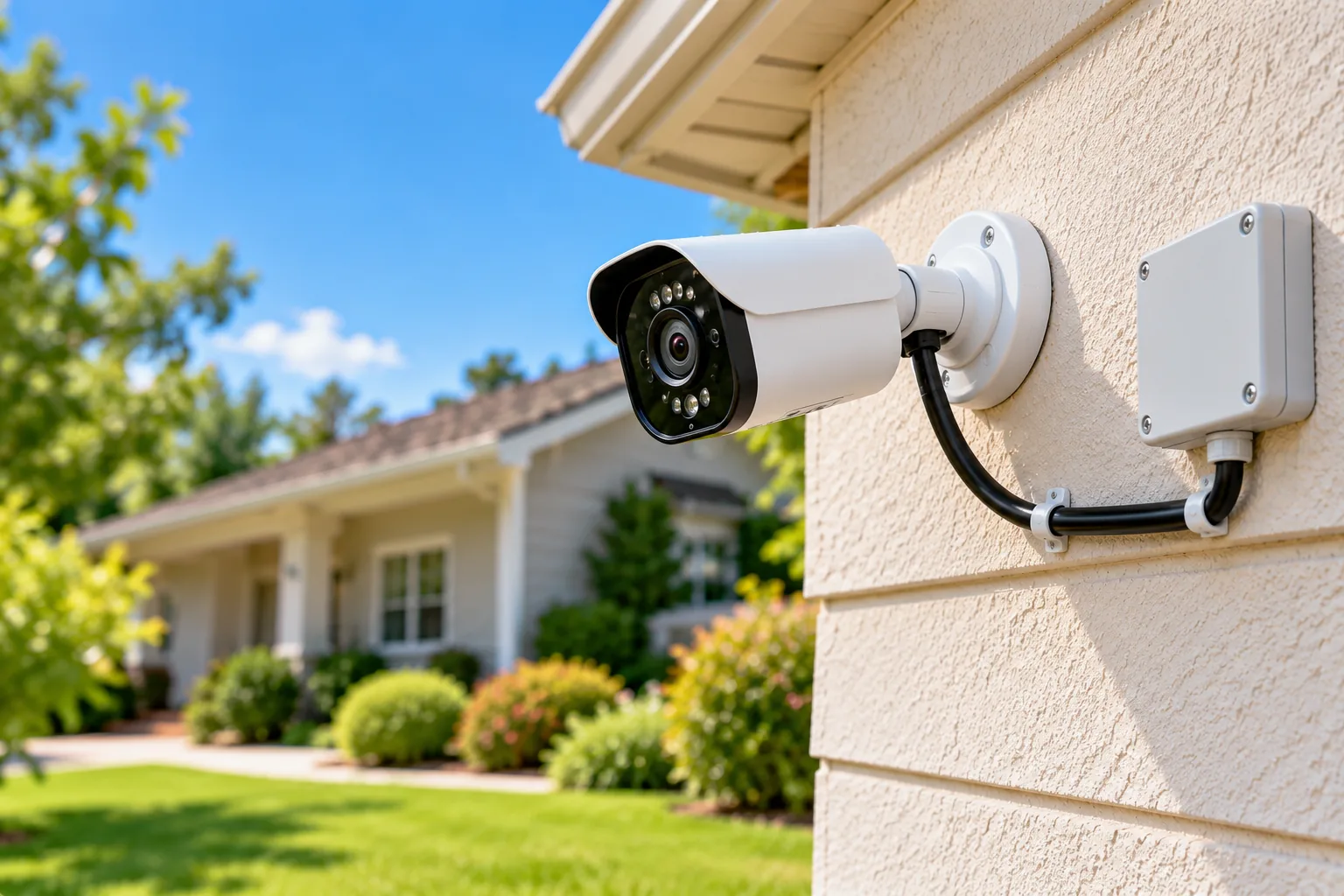
Dome security cameras need particular attention to cover condition and nearby infrared-reflective surfaces.
Use this after-dark acceptance worksheet
The following is a proposed homeowner check, not a test performed for this guide. Start with the intended normal settings and ordinary exterior lighting, then record any changes so comparisons remain meaningful.
| Record this item | Your note |
|---|---|
| Target | Gate, porch approach, driveway, or another specific area |
| Required information | Presence, recognizable detail, or useful color information |
| Lighting mode | IR, ambient-light color, or supplemental-light color |
| Conditions | Normal lights on/off, nearby lamps, weather, visible obstructions |
| Movement | Ordinary walking approach and departure through the target zone |
| Saved result | Useful detail in playback and paused moving frames |
| Next change | Position, lighting direction, or a documented camera setting |
Have a willing household member walk the route at an ordinary pace. Inspect saved playback and pause several moving frames. Check whether the needed detail is visible throughout the important area, rather than only when the person stops close to the lens. Repeat with usual lights operating, including any automatic light that changes the scene.
Change one relevant factor at a time and repeat the same route. If a change produces a brighter picture but worse moving detail, it has not solved the requirement. Keep checking the actual stored recording; notifications and an attractive live preview do not establish that the needed clip was saved.
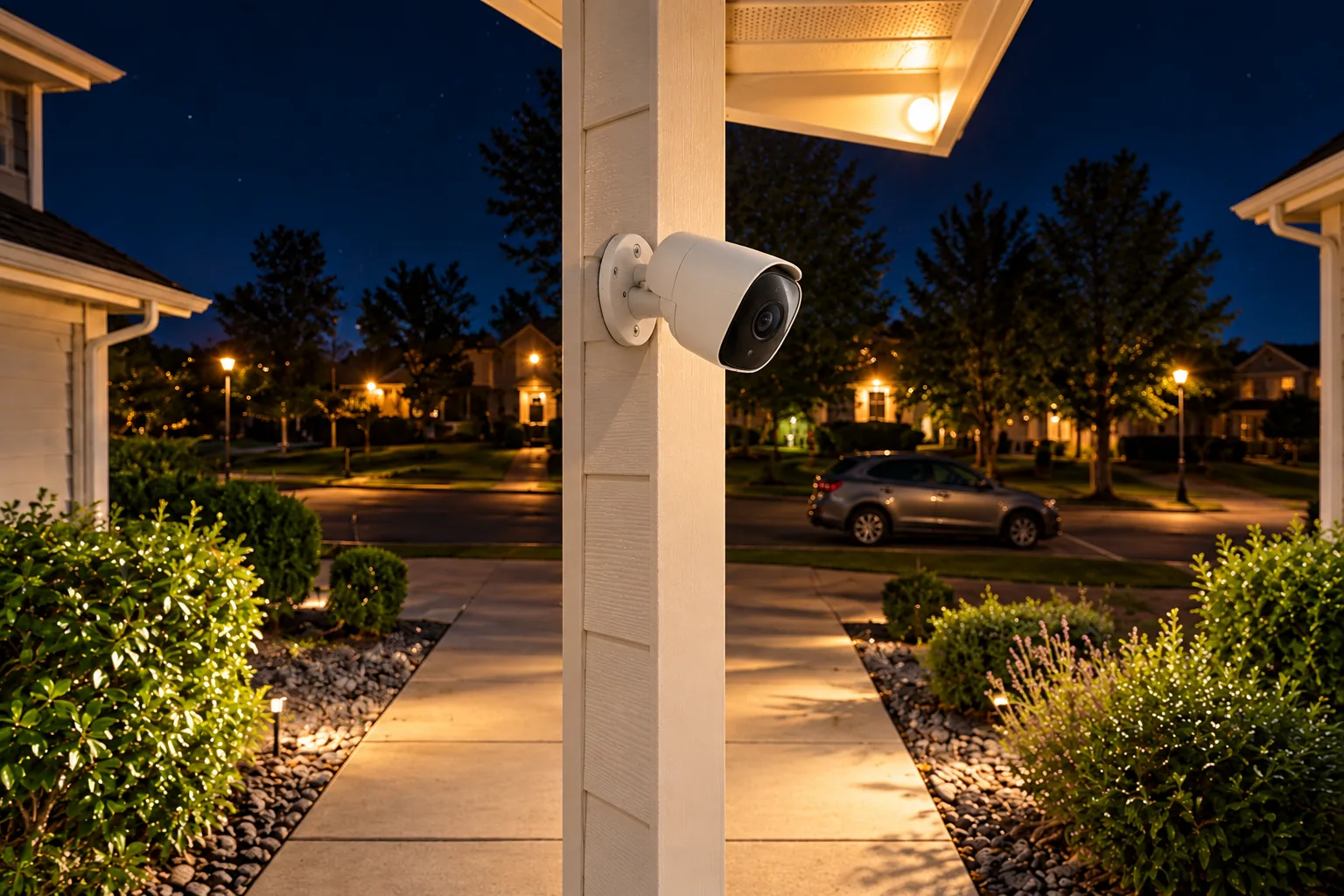
Security camera recording options should support the playback checks you expect to make after an event.
Common night-vision questions
Can a camera record color in total darkness without adding light?
A visual camera needs light to form an image. Low-light sensitivity improves how available light is used; it does not create photons. If the scene has no useful visible light, color recording requires appropriate added visible illumination. IR instead supports grayscale night imaging.
Is infrared black-and-white footage useless for identification?
No. Its usefulness depends on subject detail, angle, motion, and lighting. The specific limitation is that IR brightness does not reliably preserve visible clothing colors. Check whether the saved footage supports your actual requirement rather than treating color or grayscale as a complete quality judgment.
Should I choose the camera with the longest advertised night range?
Use range to understand the manufacturer’s illumination claim, then examine the exact scene and moving recordings. It is not an identification distance. Model revision, light direction, pixel density, reflections, and exposure behavior can all affect the information you can recover from footage.
Choose usable night detail
The best outdoor night-vision choice begins with the information you need, followed by the light available at the target. Consider IR for grayscale viewing, ambient-light color where conditions support it, and supplemental light where useful color justifies the illumination.
Shortlist by that approach and the required installation and recording arrangement. Then complete the recorded walk-through. A clear saved image of the moving subject at the important location is a more useful acceptance condition than a bright empty scene or a long distance printed on a box.